Jonathan Sullivan
Position title: Assistant Professor of Environmental Studies
Email: jonathan.sullivan@wisc.edu
Website: Jonathan Sullivan's website
- Google Scholar
- LINK
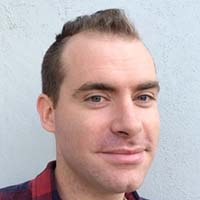
Jonathan A. Sullivan, PhD, joined the Nelson Institute for Environmental Studies at the University of Wisconsin–Madison in 2025, where he is an Assistant Professor studying how global environmental change and land use reshape inequality in communities around the world.
He was co-first author of the Global Flood Database study featured on the cover of Nature in 2021, which showed that the world’s population living in flood-prone areas is growing far faster than previously understood. Building on that work, his recent research traces the hidden health costs of flooding, including studies in Nature Medicine and The Lancet Planetary Health linking large U.S. floods to shifts in cause-specific mortality and hospitalization.
Sullivan’s lab at the Nelson Institute’s Center for Sustainability and the Global Environment (SAGE) studies how environmental change and social institutions together produce inequality. Using satellite imagery, large household surveys, and machine learning and artificial intelligence (AI), he examines who is exposed to flooding and land dispossession, and how the systems meant to help people recover – property titles, insurance eligibility, disaster-aid criteria – determine who actually gets to rebuild. It is a body of work that puts rigorous, AI-driven earth-observation science in service of a broader question of justice and equity.
He has secured research funding as Principal Investigator (PI) and Co-Investigator (Co-I) from the National Science Foundation and university research programs at UW-Madison, including a NSF EAGER award to evaluate U.S. flood-mitigation infrastructure by satellite and a UW-Madison Igniting Interdisciplinary Innovation (I³) award developing high-resolution economic models of disaster losses to improve insurance pricing. Earlier in his career, he was a Fulbright Research Fellow and Boren Fellow in Tanzania, studying food security and the well-being impacts of large-scale agricultural investment.
He earned a PhD in Environment & Sustainability from the University of Michigan (2021), a Master of Forestry from the Yale School of Forestry & Environmental Studies (2013), and a BA in Environmental Chemistry, with a minor in Public Policy, from Connecticut College (2008).